
How Closet Organizing Works for Hapeville Families
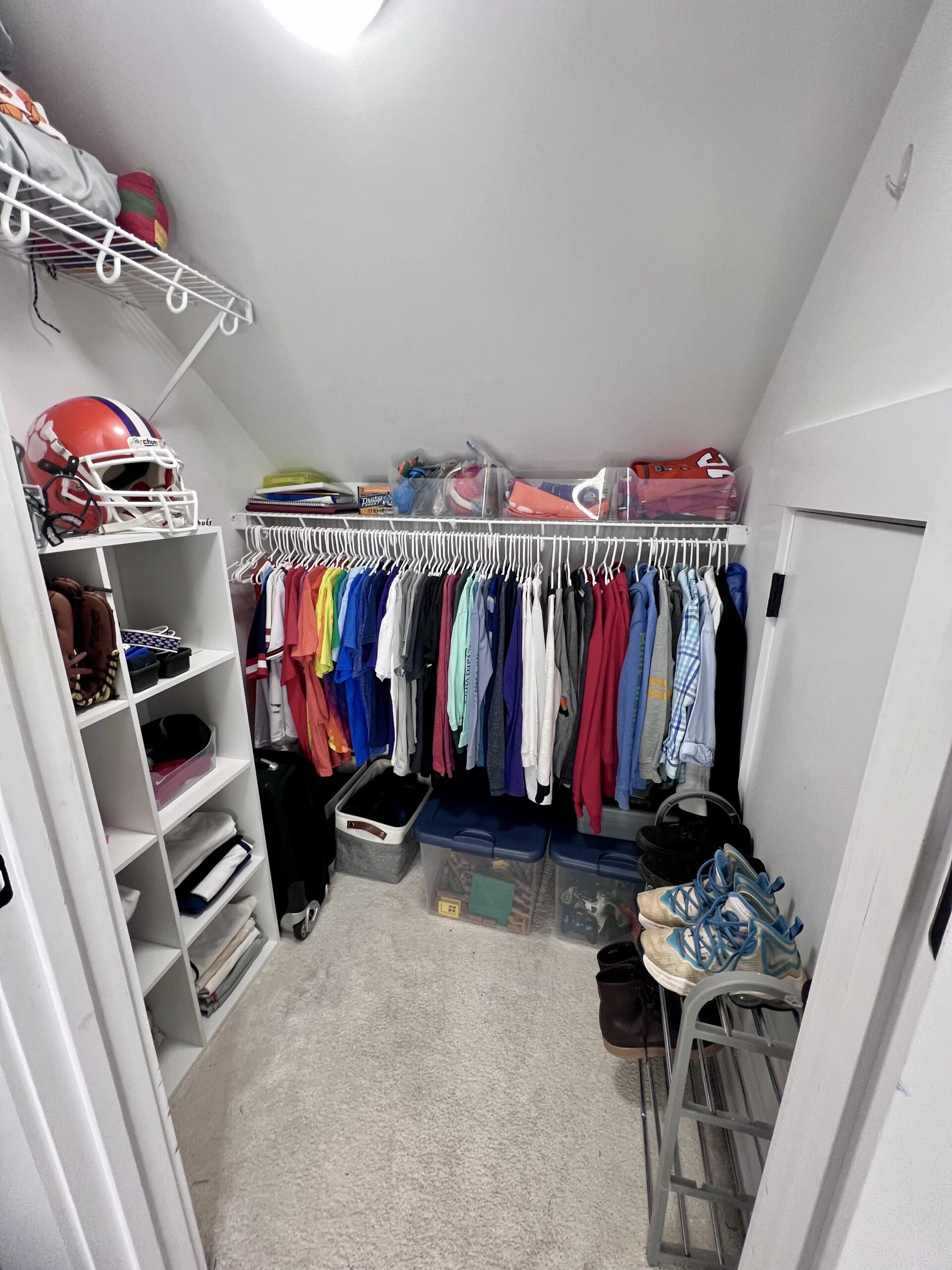
Organized closet with color-coordinated hanging clothes and sports helmet display by Imagine Organizing
Somewhere between “I’ll deal with it this weekend” and actually dealing with it, most closets in Hapeville quietly cross a line — from a little messy to genuinely stressful to open. If yours has crossed that line, take it as useful information, not a failure. It just means the system your closet is running on has stopped matching what you actually need from it.
And that’s fixable, usually faster than people expect. We spend our days rebuilding closets exactly like this across Hapeville, and the pattern holds every time: the “after” always feels bigger than the physical work involved would suggest.
Why Hapeville Closets End Up Like This
Small population (~6,500), historically working- and middle-class with growing interest from buyers seeking small-town charm close to the airport and downtown. Housing stock age: 1920s–1940s bungalows and cottages, similar bones to East Point and Decatur but smaller and less expensive historically. Small 1920s–40s bungalows create the same compact-closet, space-optimization need as East Point and Decatur, at an even smaller average square footage.
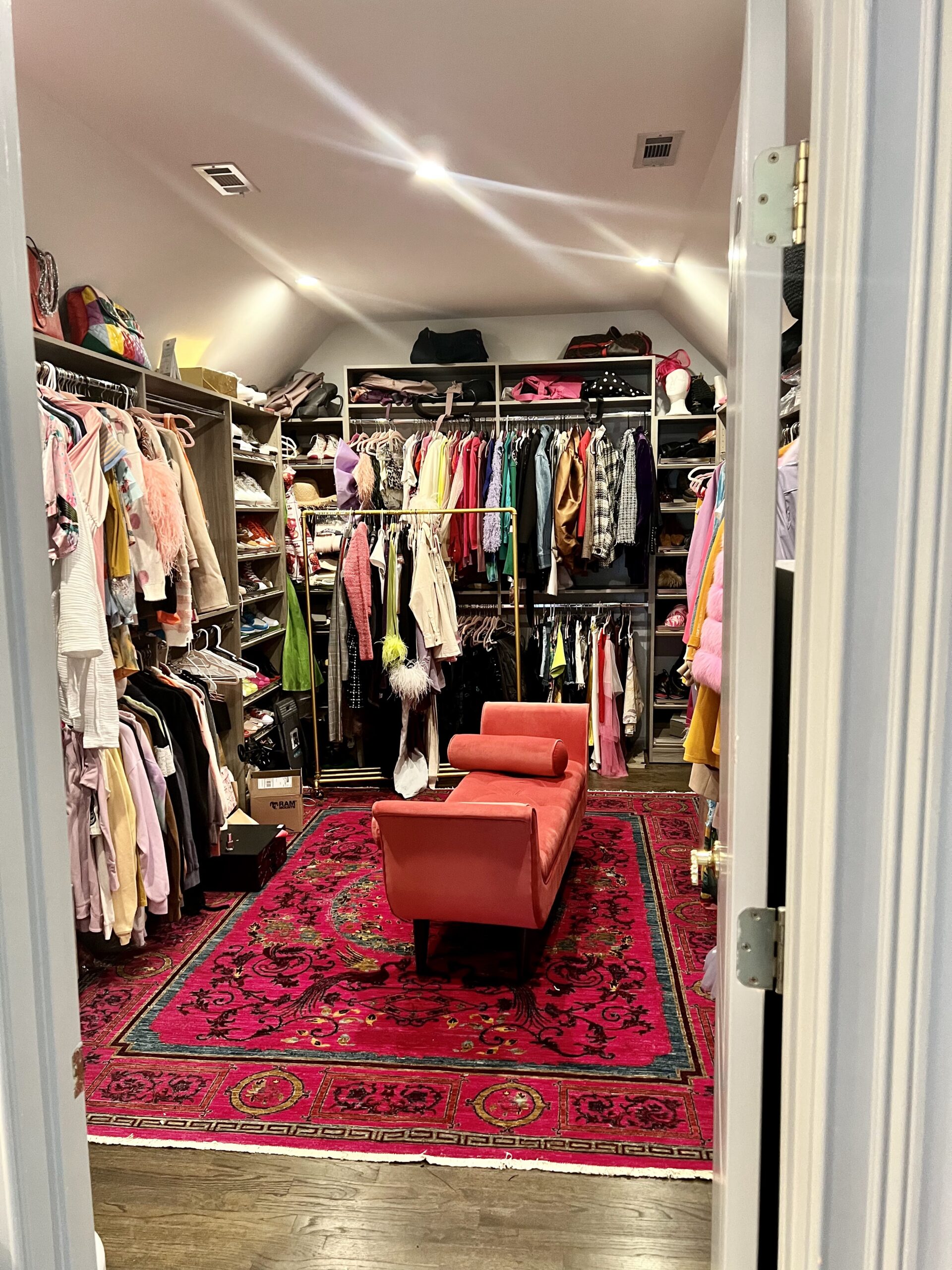
We know Hapeville — Downtown Hapeville (Main St), College Heights / established bungalow streets, and the pockets in between. Whether you’re off N Central Ave/Main St or on the other side of town, we come to you. And honestly, the closet problem looks a little different in every one of those pockets depending on which one you’re in. Airport-industry and Porsche/corporate relocation employees moving into the area are a solid relocation/unpack market.
Hapeville residents are proud of their small-town identity and genuine historic claim to fame (the original Chick-fil-A), and value a service provider who treats their small city as a real place, not an airport-adjacent afterthought. Straightforward, friendly, community-scale service wins here.
The Same Three Patterns, Every Time
- “I might wear this again someday.” That single sentence is responsible for more crammed closets than almost anything else — it quietly protects things that haven’t earned their space in years.
- No hierarchy between everyday and rare. If the thing you reach for weekly is stored exactly like the thing you touch twice a year, you’re paying the same mental cost to find either one.
- A system frozen in an old routine. Maybe it was set up for a job you don’t have anymore, or a body that dressed a little differently, or a family that was smaller. Closets rarely get rebuilt when life changes — they just get added to.

None of this means you’re disorganized as a person — it means the closet’s plan (or lack of one) hasn’t kept up with your actual life.
What Most People Get Wrong First
Here’s what almost everyone tries before they call us: a weekend, a trip to a big box store, and a cart full of bins. And look — that’s not a bad instinct. But here’s the thing nobody tells you going in: buying containers before you sort is backwards. You end up with the wrong sizes, half of them empty, half of your stuff still homeless, and the closet looks “organized” for about three weeks before it slides right back.
The real fix isn’t more storage. It’s fewer decisions. A closet that works is one where every single thing already has a spot, so putting it away isn’t a choice you have to make every single day — it’s just where it goes. That’s the whole secret, and it’s also the whole reason a DIY weekend usually doesn’t stick: you’re solving a container problem when it’s actually a decision-fatigue problem.
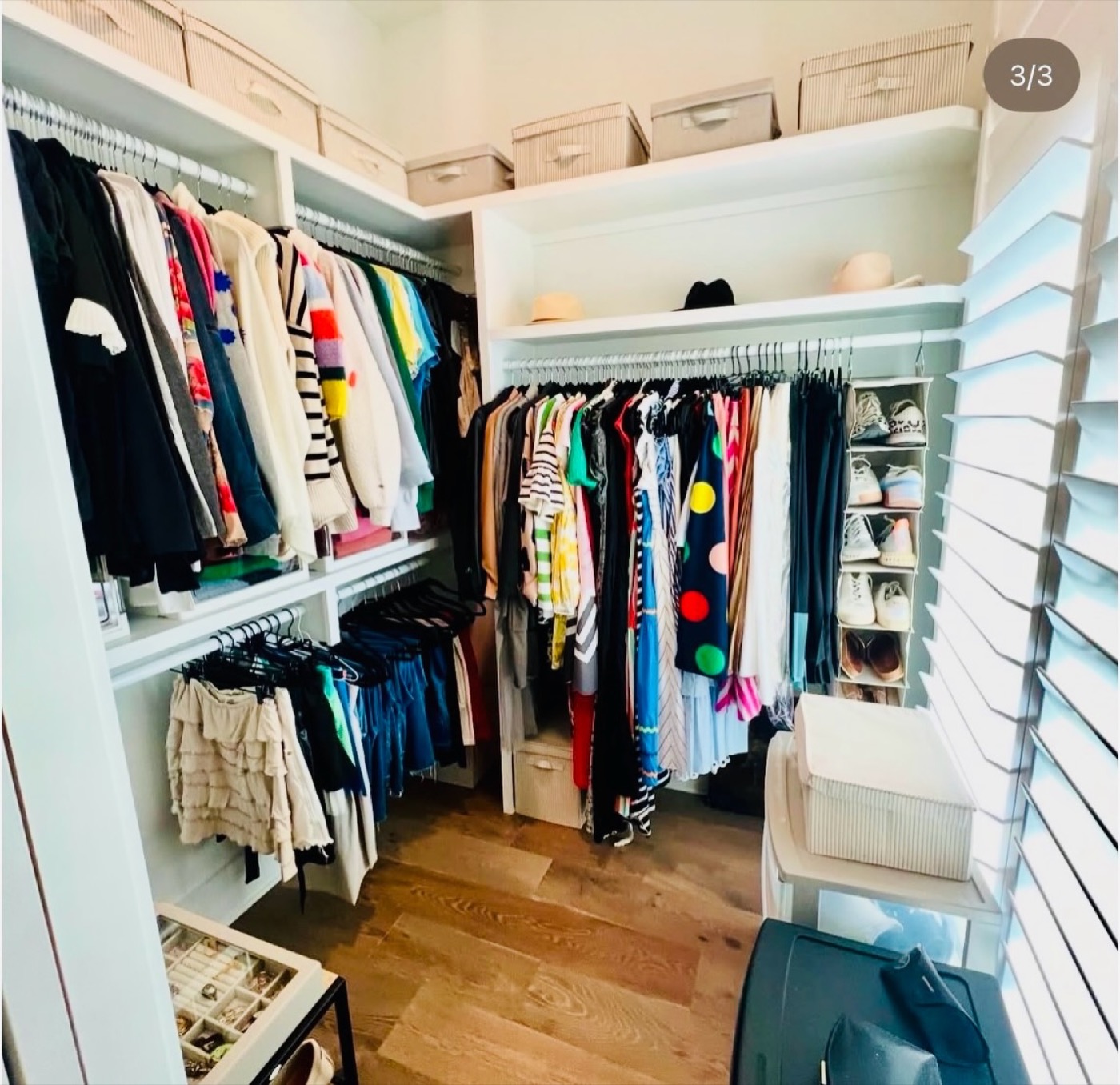
There’s actual research behind this, not just our opinion. The American Psychological Association has written about how visual clutter competes for your attention and quietly raises stress, even when you’ve stopped consciously noticing the mess. So a closet that’s been “off” for a year isn’t just an inconvenience — it’s a small, steady tax on your mornings that most people don’t even clock as the source of the stress.
What Closet Organizing in Hapeville Actually Looks Like
We start with everything out — every hanger, every bin, every forgotten gift-with-tags-still-on. That part’s not glamorous, but it’s the only way to actually see what you own instead of what you remember owning. From there we sort by what you actually reach for, not by some ideal version of your wardrobe. Then we build zones: everyday stuff at eye level and easy reach, occasional stuff up high or tucked back, and a real system for the in-between category everyone has — the “maybe, someday” pile.
Only after all of that do we talk containers, and by then it’s easy, because we already know exactly what needs to hold what. Hapeville is tiny (~2.5 sq mi, ~6,500 people) — one of the smallest cities in the 20-city set.
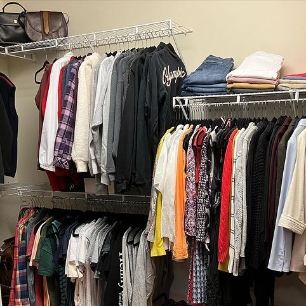
One line we repeat constantly in Hapeville homes: “You don’t need a smaller wardrobe — you need a plan smart enough for the one you’ve got.”
Why This Stays Organized Afterward
Here’s the part most people don’t expect: the sorting is rarely the hard part. Deciding what to keep usually goes faster than people brace for. What’s hard is building something that survives real life — a rushed morning, a tired evening, a kid who just dumps their laundry wherever. A good system accounts for that instead of assuming a perfectly tidy version of you.
Among the shortest commutes to downtown Atlanta of any city on this list (8–10 minutes). That’s exactly the kind of detail that changes how we set up a closet — not a generic template, but one built around how your household actually moves through a morning.
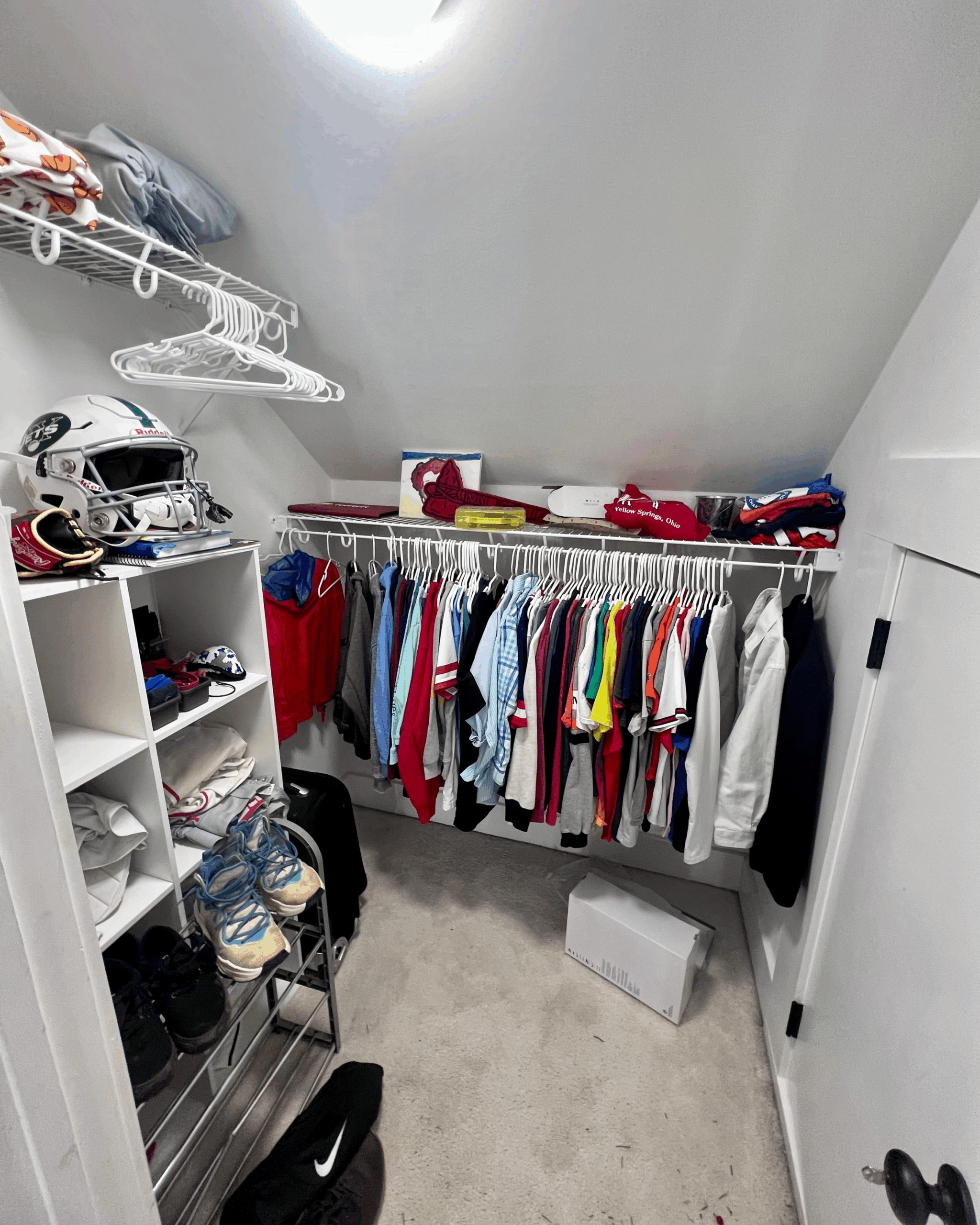
One Hapeville project stands out: a couple who’d merged two households into one closet and never actually merged the systems — just stacked two lifetimes of stuff on top of each other. We didn’t split it back in two; we built one system around how they actually got ready together each morning. Six months later, they told us it was still holding, which is exactly the point.
The Cost of “I’ll Get to It”
Nobody puts “broken closet” on a budget spreadsheet, but it costs you something every day anyway — a few extra minutes every morning, a little extra stress every time you open that door, a small dose of guilt that never fully goes away. It’s invisible, but it’s not nothing.
And here’s the part that tends to surprise Hapeville clients: the actual fix takes far less time than the problem has already cost them. Usually just a handful of hours, once — not an ongoing project, not a weekend lost every few months. Just done.
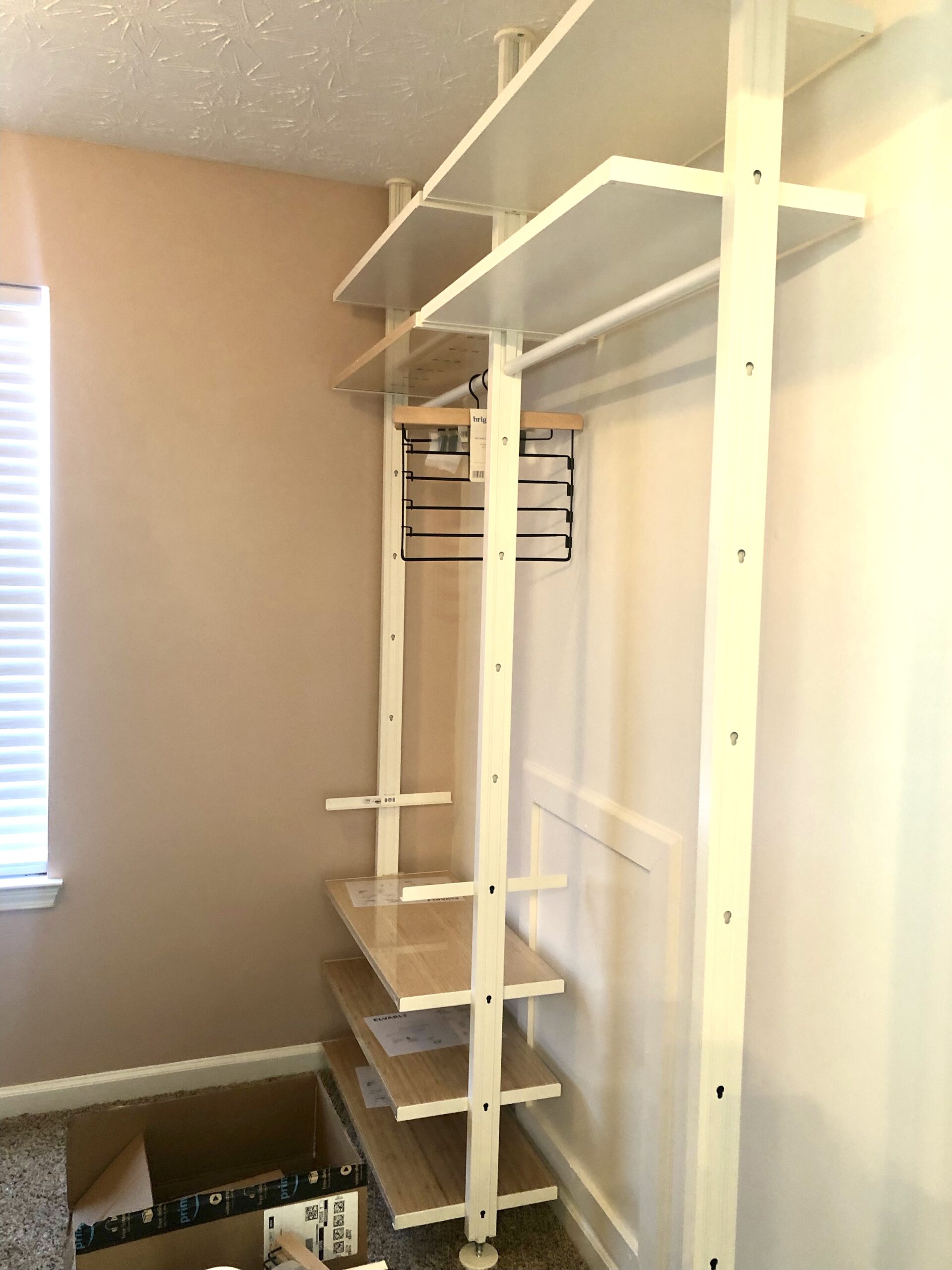
What Changes Once It’s Actually Fixed
The best sign a closet project worked isn’t how it photographs — it’s how little you think about it afterward. You open the door, grab what you need, and move on with your morning. No searching, no sighing, no mental note to “deal with this eventually.” It just works, quietly, in the background of your life.
There’s a physical side of that too: a door that actually shuts, floor space you’d forgotten you had, a system simple enough that everyone in the house can actually follow it — not just you. That kind of system tends to matter most around no single season — demand stays steady year-round, when everyone’s schedule gets tighter.
And it tends to spread. Once one closet in your Hapeville home proves an organized space can stay that way, the rest of the house starts to feel like it’s within reach too.
Let’s Fix Your Hapeville Closet
You don’t have to keep living around a closet that’s stopped working. We’re Imagine Organizing, NAPO-GA and NMSDC certified, and this is genuinely what we do all day for Hapeville homes just like yours. Get a free consultation or call 404-490-1037 — let’s talk about your space.
Want to keep reading? Try our guide to why closets overflow so fast, see how the same plan works in Forest Park, or learn about our Home Organizing service in Hapeville and everything else we organize.
Frequently Asked Questions
Can you organize a closet with a really awkward layout — sloped ceiling, weird corner, no room to swing a door?
That’s genuinely most of what we do in Hapeville’s older homes. Odd layouts just mean we get more creative with the plan, not that the closet’s a lost cause.
What’s the first step if I want to get started?
A quick call or a free consultation — we’ll talk through your Hapeville closet, figure out roughly what it’ll take, and go from there.
Do you work on closets in apartments and rentals, not just houses?
Absolutely — plenty of our Hapeville clients are in apartments or rentals. The approach is the same; we just work within what’s already installed.
Is there a minimum size closet you’ll take on?
No — from a small reach-in to a full walk-in, if it’s a Hapeville closet that’s bothering you, we’re happy to help.
Can you work around my schedule?
Yes — we book around Hapeville clients’ work and family schedules, including evenings and weekends when needed.
Ready for Closet Organizing in Hapeville?
We’re Imagine Organizing — NAPO-GA and NMSDC certified, serving Hapeville and the greater Atlanta area.
Call 404-490-1037Related: Home Organizing in Hapeville · All Home Organizing services · NAPO national standards