
What Closet Organizing Really Looks Like in Doraville
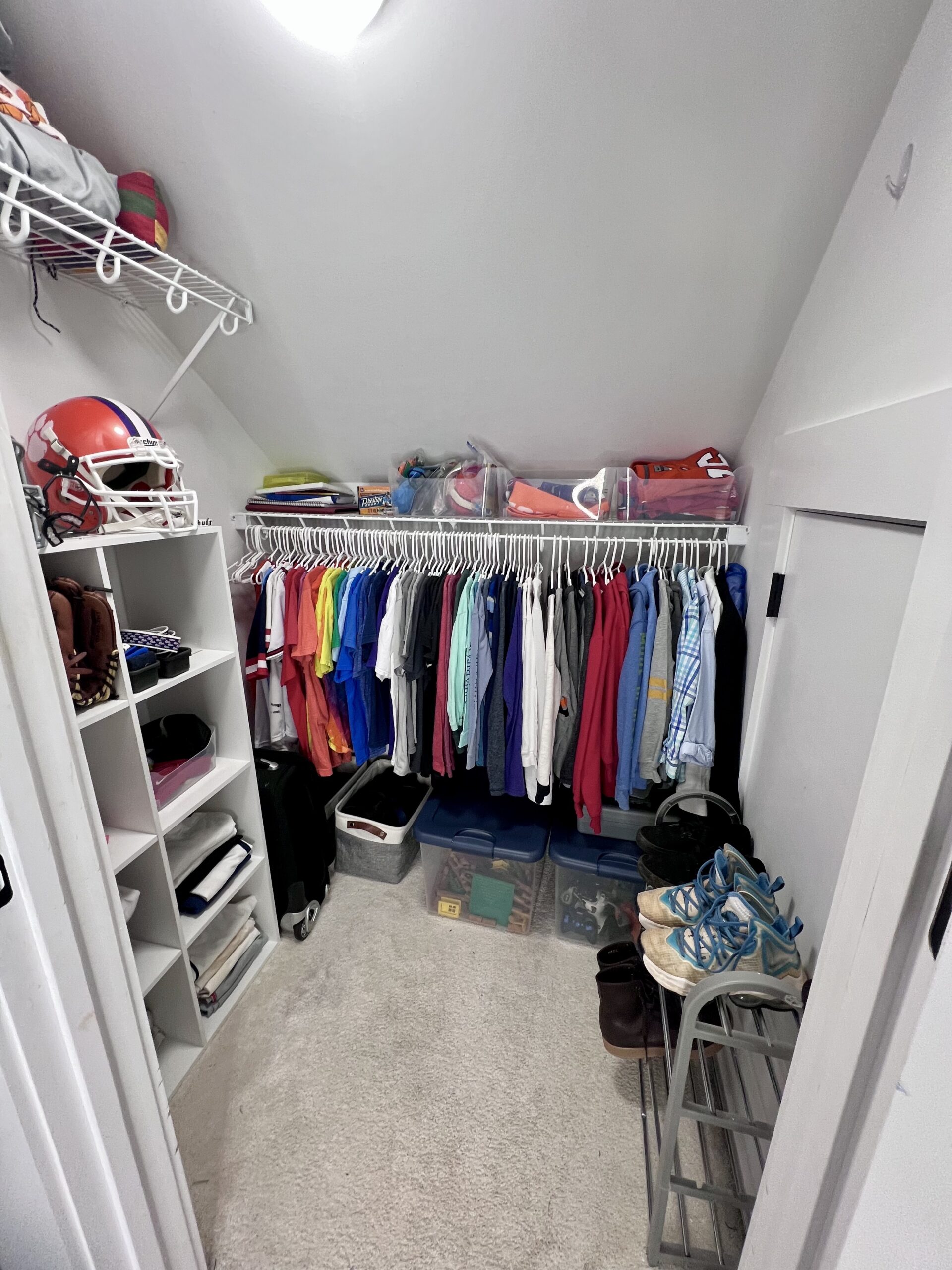
Organized closet with color-coordinated hanging clothes and sports helmet display by Imagine Organizing
Here’s the thing about a closet that’s stopped working: you don’t really notice it happening. It’s not one bad day. It’s a hundred small mornings where you dig past three shirts you don’t wear to find the one you do, where the door doesn’t close all the way anymore, where “I’ll deal with it this weekend” quietly turns into six months. If that’s where you’re at in Doraville, you’re not behind. You’re just at the point where enough is enough — and that’s actually a good place to be, because from here, the fix is genuinely simple.
We say that with confidence because it’s what we do all day, every day, in homes across Doraville. Not as a sales pitch — as an actual pattern we’ve watched play out dozens of times. The closet always feels like the biggest, most overwhelming project in the house, right up until the moment it’s actually done. Then it just becomes the thing that quietly works.
Why Doraville Closets End Up Like This
A historically working- and middle-class, highly diverse city undergoing significant transformation via the Assembly redevelopment. Assembly-driven new multifamily construction is producing a wave of first-apartment and first-townhome unpack/organize clients — young, often first-time movers to the area for production/entertainment-industry jobs.
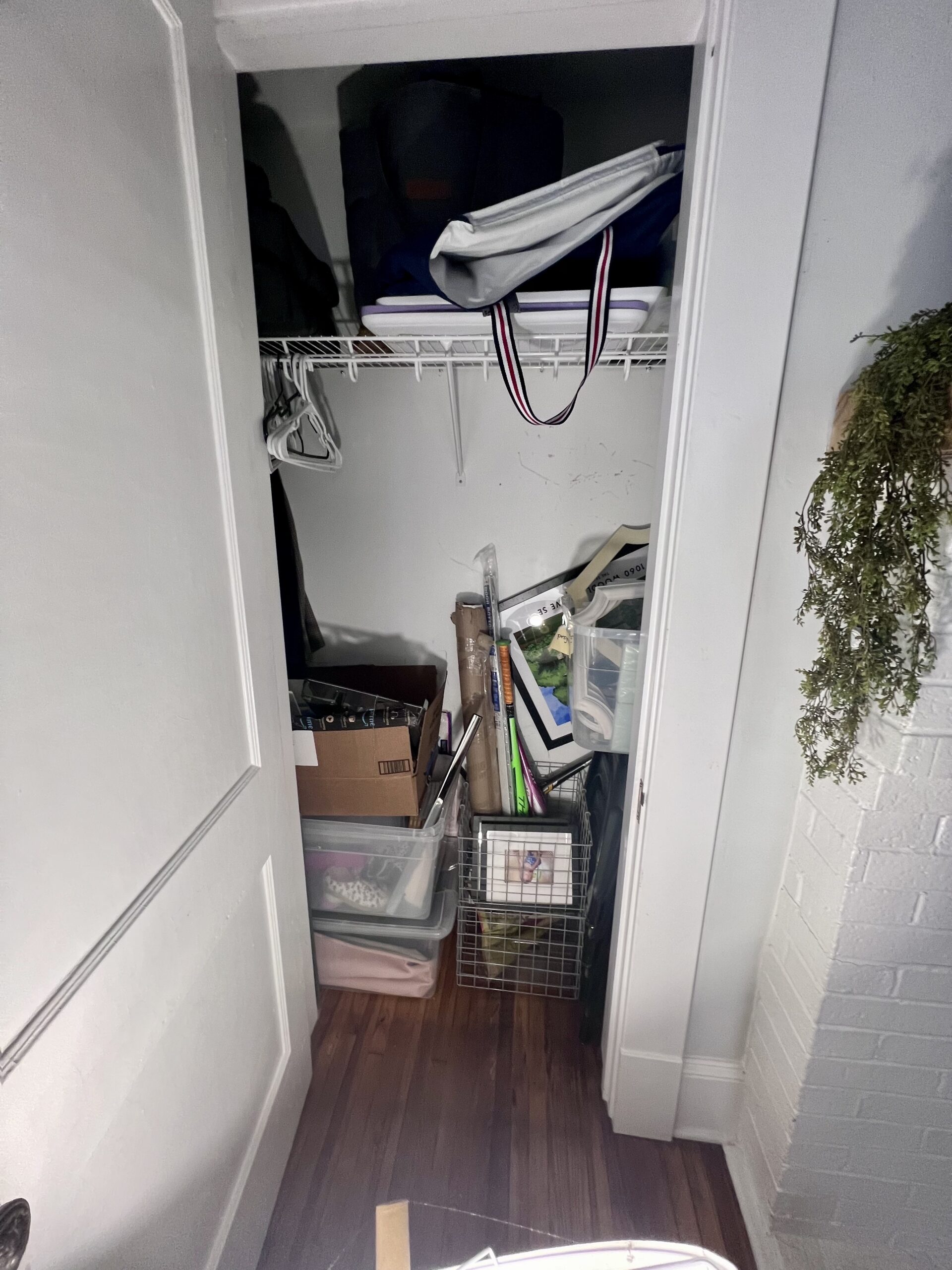
We know Doraville — Historic Doraville, Shallowford / Winters Chapel Rd corridor, Assembly (former GM plant redevelopment), and the pockets in between. You’ll see it around Assembly Atlanta. Whether you’re off Peachtree Industrial Blvd or on the other side of town, we come to you. And honestly, the closet problem looks a little different in every one of those pockets depending on which one you’re in. Established ranch neighborhoods need standard home organizing (closets, garages, kitchens).
Doraville’s established residents value straightforward, honest, community-rooted service and often prefer clear communication given the area’s multicultural population. Newer residents drawn by Assembly are younger, transit-oriented renters/buyers who research online and want efficient, modern service.
Three Things We See Over and Over in Doraville Closets
- The “someday” pile takes over. Clothes you’re keeping for a future version of yourself, gifts you never wore, that one formal outfit from an event three years ago — it all quietly eats the real estate the stuff you actually wear needs.
- Everything’s at the same “priority level.” When the shirt you wear every week is stored the exact same way as the sweater you wear once a winter, your brain has to work just as hard to find either one.
- The system was built for a different season of life. Maybe it was set up for a job you don’t have anymore, or a body that dressed a little differently, or a family that was smaller. Closets rarely get rebuilt when life changes — they just get added to.

None of that means you’re bad at this. It means the closet was never actually designed — it just sort of happened, the way most closets do.
Why the Store-Bought Fix Rarely Sticks
Most Doraville closets we take on have already survived at least one DIY attempt — usually a trip for bins, dividers, maybe a hanging shoe rack. None of it is wrong, exactly. It’s just incomplete. Products organize space; they don’t organize decisions. And a closet that’s hard to keep up with is almost always a decision problem wearing a storage-space disguise.
Once the decisions are made — what stays, what goes, what lives where — the containers basically pick themselves.
There’s actual research behind this, not just our opinion. The American Psychological Association has written about how visual clutter competes for your attention and quietly raises stress, even when you’ve stopped consciously noticing the mess. So a closet that’s been “off” for a year isn’t just an inconvenience — it’s a small, steady tax on your mornings that most people don’t even clock as the source of the stress.
What Closet Organizing in Doraville Actually Looks Like
We start with everything out — every hanger, every bin, every forgotten gift-with-tags-still-on. That part’s not glamorous, but it’s the only way to actually see what you own instead of what you remember owning. From there we sort by what you actually reach for, not by some ideal version of your wardrobe. Then we build zones: everyday stuff at eye level and easy reach, occasional stuff up high or tucked back, and a real system for the in-between category everyone has — the “maybe, someday” pile.
Only after all of that do we talk containers, and by then it’s easy, because we already know exactly what needs to hold what. Doraville MARTA station is a major Gold Line hub with a large park-and-ride.
One line we repeat constantly in Doraville homes: “You don’t need a smaller wardrobe — you need a plan smart enough for the one you’ve got.”
Why This Stays Organized Afterward
Here’s the part most people don’t expect: the sorting is rarely the hard part. Deciding what to keep usually goes faster than people brace for. What’s hard is building something that survives real life — a rushed morning, a tired evening, a kid who just dumps their laundry wherever. A good system accounts for that instead of assuming a perfectly tidy version of you.
Historically working- and middle-class, highly diverse population undergoing rapid transformation. That’s exactly the kind of detail that changes how we set up a closet — not a generic template, but one built around how your household actually moves through a morning.
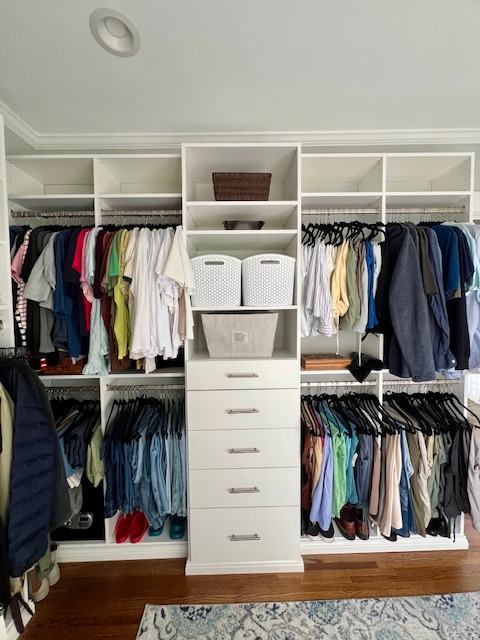
We had a Doraville client last year — closet so full the door wouldn’t shut, two kids, a dog, and a 6:45am school drop-off she was always five minutes from missing. We didn’t just clean it out. We rebuilt it around that exact morning: uniforms at kid-height, shoes by the door instead of buried in the back, her own stuff sorted by what she actually reaches for on a rushed day versus what she saves for when she has time. She told us later the closet wasn’t really the win — the calmer mornings were.
The Cost of “I’ll Get to It”
Nobody puts “broken closet” on a budget spreadsheet, but it costs you something every day anyway — a few extra minutes every morning, a little extra stress every time you open that door, a small dose of guilt that never fully goes away. It’s invisible, but it’s not nothing.
And here’s the part that tends to surprise Doraville clients: the actual fix takes far less time than the problem has already cost them. Usually just a handful of hours, once — not an ongoing project, not a weekend lost every few months. Just done.
What It Feels Like When It’s Done
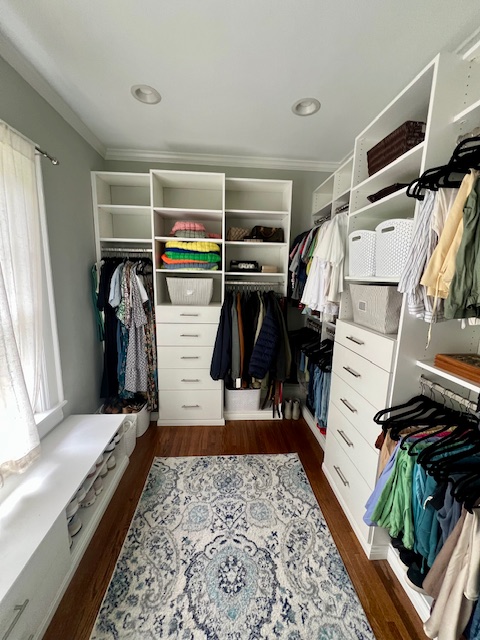
Picture opening that door and just… not thinking about it. No sigh, no digging, no “where did I put that.” You get dressed and you’re out the door, and the closet did its job so quietly you almost forget it used to be a problem at all. That’s the actual goal — not a magazine photo, a closet that disappears into the background of your life because it finally works.
And there’s a real, physical version of that relief too: floor space back, a door that shuts, a system your whole household can actually keep up without you being the only one who knows where anything goes. That kind of system tends to matter most around the leasing cycle rather than one season, when everyone’s schedule gets tighter.
Give it a month and you’ll notice the ripple effect, too — a closet that finally works has a funny way of making the rest of the room feel calmer along with it. That’s not an accident. Once one space in your Doraville home proves it can stay organized, it gets a lot easier to believe the rest of the house can too.
Your Doraville Closet Doesn’t Have to Stay This Way
Whenever you’re ready, we’re here — NAPO-GA and NMSDC certified, and genuinely glad to help. Get a free consultation or call 404-490-1037, and let’s get your Doraville closet working the way it should.
Want to keep reading? Try our guide to why closets overflow so fast, see how the same plan works in Marietta, or learn about our Home Organizing service in Doraville and everything else we organize.
Frequently Asked Questions
Do you work on closets in apartments and rentals, not just houses?
Absolutely — plenty of our Doraville clients are in apartments or rentals. The approach is the same; we just work within what’s already installed.
Is there a minimum size closet you’ll take on?
No — from a small reach-in to a full walk-in, if it’s a Doraville closet that’s bothering you, we’re happy to help.
Can you work around my schedule?
Yes — we book around Doraville clients’ work and family schedules, including evenings and weekends when needed.
What if I only want part of the closet organized, not the whole thing?
That’s completely fine — plenty of Doraville projects start small. We’ll work within whatever scope makes sense for you.
How long does closet organizing in Doraville usually take?
Most single closets take one session, usually 3 to 5 hours depending on size. A full Doraville home with several closets to tackle usually spreads across a few visits so nothing feels rushed.
Ready for Closet Organizing in Doraville?
We’re Imagine Organizing — NAPO-GA and NMSDC certified, serving Doraville and the greater Atlanta area.
Call 404-490-1037Related: Home Organizing in Doraville · All Home Organizing services · NAPO national standards