
Is Closet Organizing Right for Your College Park Home?
Styled closet shelving with shoes, woven baskets, and a dresser topped with a jewelry box
Somewhere between “I’ll deal with it this weekend” and actually dealing with it, most closets in College Park quietly cross a line — from a little messy to genuinely stressful to open. If yours has crossed that line, take it as useful information, not a failure. It just means the system your closet is running on has stopped matching what you actually need from it.
And that’s fixable, usually faster than people expect. We spend our days rebuilding closets exactly like this across College Park, and the pattern holds every time: the “after” always feels bigger than the physical work involved would suggest.
Why College Park Closets End Up Like This
A historically working- and middle-class, majority-Black city whose economy is fundamentally shaped by the airport next door. Airport-industry shift workers (Delta employees, TSA, airline staff, hospitality workers) are a strong concierge service market — people working irregular hours genuinely need help with errands, package management, and household admin, arguably more than the “busy executive” framing used in wealthier cities.

We know College Park — Historic College Park (Main St/Old National Hwy area), Randall/Godby area, Camp Creek Pkwy corridor, and the pockets in between. You’ll see it around Historic Main Street College Park. Whether you’re off Main St or on the other side of town, we come to you. And honestly, the closet problem looks a little different in every one of those pockets depending on which one you’re in. Historic Main St homes need the same small-closet, space-optimization organizing seen in Decatur/East Point.
College Park residents value practicality, reliability, and straightforward pricing — many work shift schedules tied to airport/aviation operations, so flexible scheduling and clear communication matter more here than almost anywhere else on the list. The historic Main St renovator community is more design-conscious and responds to before/after proof.
Three Things We See Over and Over in College Park Closets
- The “someday” pile takes over. Clothes you’re keeping for a future version of yourself, gifts you never wore, that one formal outfit from an event three years ago — it all quietly eats the real estate the stuff you actually wear needs.
- Everything’s at the same “priority level.” When the shirt you wear every week is stored the exact same way as the sweater you wear once a winter, your brain has to work just as hard to find either one.
- The system was built for a different season of life. Kids grow, jobs change, seasons turn over, and the closet just absorbs all of it without ever getting a real reset. That’s how a system built five years ago quietly stops fitting the life you’re living now.

None of that means you’re bad at this. It means the closet was never actually designed — it just sort of happened, the way most closets do.
What Most People Get Wrong First
Here’s what almost everyone tries before they call us: a weekend, a trip to a big box store, and a cart full of bins. And look — that’s not a bad instinct. But here’s the thing nobody tells you going in: buying containers before you sort is backwards. You end up with the wrong sizes, half of them empty, half of your stuff still homeless, and the closet looks “organized” for about three weeks before it slides right back.
The real fix isn’t more storage. It’s fewer decisions. A closet that works is one where every single thing already has a spot, so putting it away isn’t a choice you have to make every single day — it’s just where it goes. That’s the whole secret, and it’s also the whole reason a DIY weekend usually doesn’t stick: you’re solving a container problem when it’s actually a decision-fatigue problem.
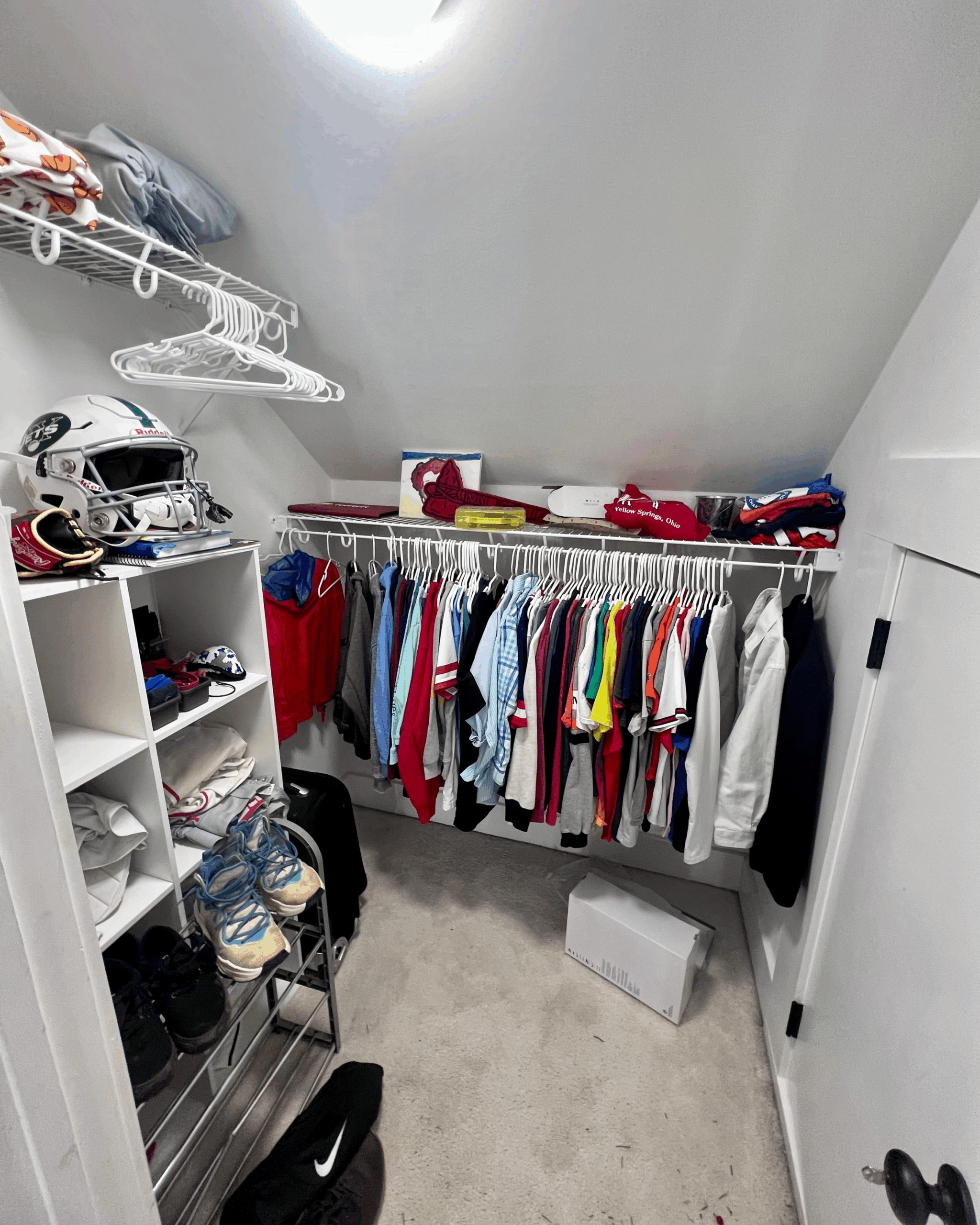
There’s actual research behind this, not just our opinion. The American Psychological Association has written about how visual clutter competes for your attention and quietly raises stress, even when you’ve stopped consciously noticing the mess. So a closet that’s been “off” for a year isn’t just an inconvenience — it’s a small, steady tax on your mornings that most people don’t even clock as the source of the stress.
The Actual Process, Step by Step
First, everything comes out of the closet — no exceptions, no “we’ll just work around this pile.” Second, we sort together, fast and judgment-free: keep, donate, toss. Third, we map the space around how you actually get dressed, not a showroom photo. Only at the very end do bins and organizers enter the picture, chosen for the exact things that are staying.
Woodward Academy, based in College Park, is one of the largest independent schools in the United States.
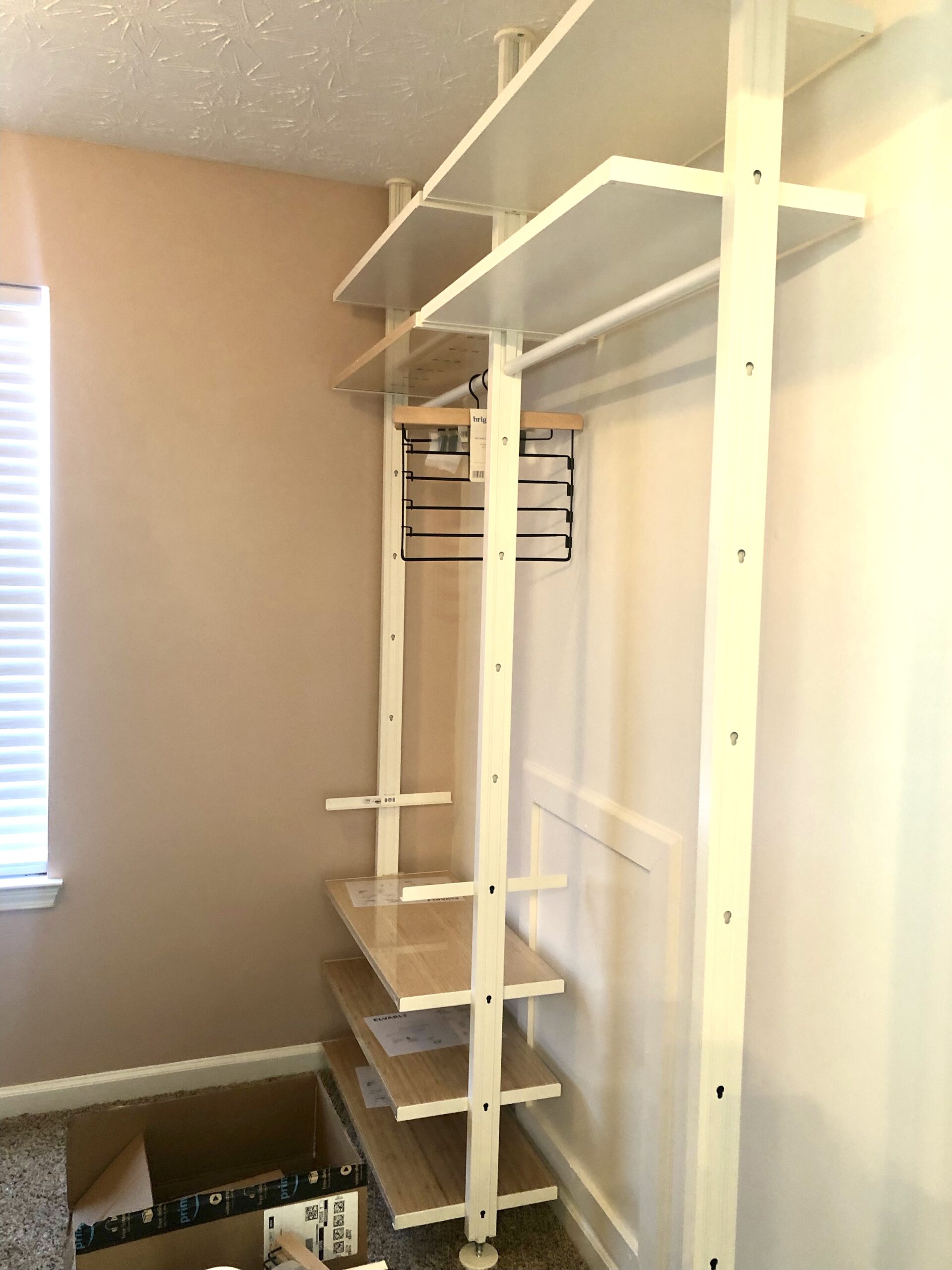
One line we repeat constantly in College Park homes: “You don’t need a smaller wardrobe — you need a plan smart enough for the one you’ve got.”
How We Make Sure It Doesn’t Slide Back
Plenty of closets look great on day one and slide right back by month two — that’s the actual failure point most DIY projects hit. The fix isn’t trying harder to stay tidy. It’s building a system so simple that staying tidy barely takes effort at all, even on your busiest, most distracted days.
Historic Main Street College Park has genuine Victorian/Craftsman-era charm, an under-the-radar historic-home pocket. That’s exactly the kind of detail that changes how we set up a closet — not a generic template, but one built around how your household actually moves through a morning.
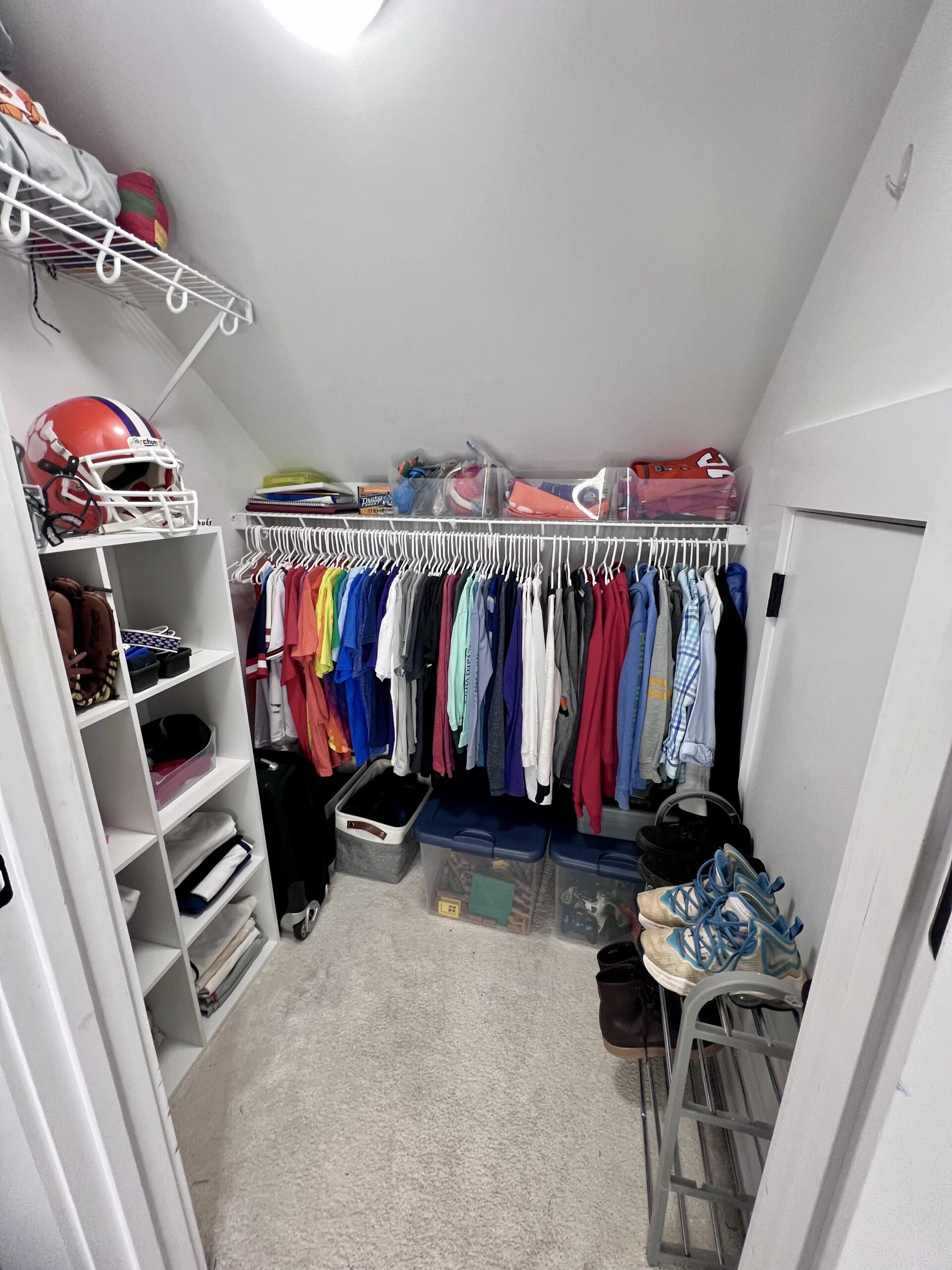
A College Park client called us mid-move, closet boxes still half-unpacked eight months later because nothing had a real spot. Rather than just putting things away, we built the system first — zones, categories, a real plan — then unpacked into it. She said it was the first closet in years that actually felt like it was hers instead of something she was managing.
The Cost of “I’ll Get to It”
Nobody puts “broken closet” on a budget spreadsheet, but it costs you something every day anyway — a few extra minutes every morning, a little extra stress every time you open that door, a small dose of guilt that never fully goes away. It’s invisible, but it’s not nothing.
And here’s the part that tends to surprise College Park clients: the actual fix takes far less time than the problem has already cost them. Usually just a handful of hours, once — not an ongoing project, not a weekend lost every few months. Just done.

The Real Payoff
Here’s the honest measure of success: a month after we finish, you’ve basically forgotten the closet was ever a problem. It just works — quietly, every single day, without you having to manage it. That’s a bigger win than it sounds like, because it means the mental energy that closet used to take is just… gone.
Physically, it means a door that closes, floor space that’s actually floor, and a setup simple enough that it survives real mornings, not just calm ones. That kind of system tends to matter most around hiring cycles rather than one season, when everyone’s schedule gets tighter. And once your College Park household sees one space hold up this well, it usually becomes the argument for tackling the next one.
Ready to See What Your College Park Closet Could Look Like?
If you’re in College Park and your closet’s reached the point where you’ve stopped even trying to keep it up, that’s exactly the moment we’re here for. We’re Imagine Organizing — NAPO-GA and NMSDC certified, and we treat every College Park home like it’s our own. Get a free consultation or call 404-490-1037, and let’s talk about what your closet could actually look like.
Want to keep reading? Try our guide to why closets overflow so fast, see how the same plan works in Tucker, or learn about our Home Organizing service in College Park and everything else we organize.
Frequently Asked Questions
Can you work around my schedule?
Yes — we book around College Park clients’ work and family schedules, including evenings and weekends when needed.
What if I only want part of the closet organized, not the whole thing?
That’s completely fine — plenty of College Park projects start small. We’ll work within whatever scope makes sense for you.
How long does closet organizing in College Park usually take?
Most single closets take one session, usually 3 to 5 hours depending on size. A full College Park home with several closets to tackle usually spreads across a few visits so nothing feels rushed.
Do I need to buy bins before you come to my College Park home?
Nope — please don’t. That’s genuinely the most common (and most expensive) mistake. We sort first, then bring or recommend exactly what fits, sized to what you’re actually keeping.
Will you make me get rid of things I want to keep?
Never. We’re not the clutter police. Our whole job is making sure everything you decide to keep has an actual home — the keep-or-go calls are always yours.
Ready for Closet Organizing in College Park?
We’re Imagine Organizing — NAPO-GA and NMSDC certified, serving College Park and the greater Atlanta area.
Call 404-490-1037Related: Home Organizing in College Park · All Home Organizing services · NAPO national standards